
Era 2. Facts – Encyclopedia Galactica
The Autarky Era | ~2051-2060 | 11-20 HE
TLDR: T The Autarky Years are remembered as the decade the ships came light: not empty, not catastrophic, but light enough, often enough, that everyone on Mars is forced to confront exactly how much of their life depends on factories, budgets and politics a planet away. Port Harmonia expands from a fortified base into a small village under stone, with Ridgeway and Boreal maturing into real satellites. Independence Levels, Green Zone rules and layout scores harden from aspirations into binding constraints. Local loops for air, water, food, power and critical spares cross thresholds where a disrupted decade from Earth is a crisis, not a death sentence.
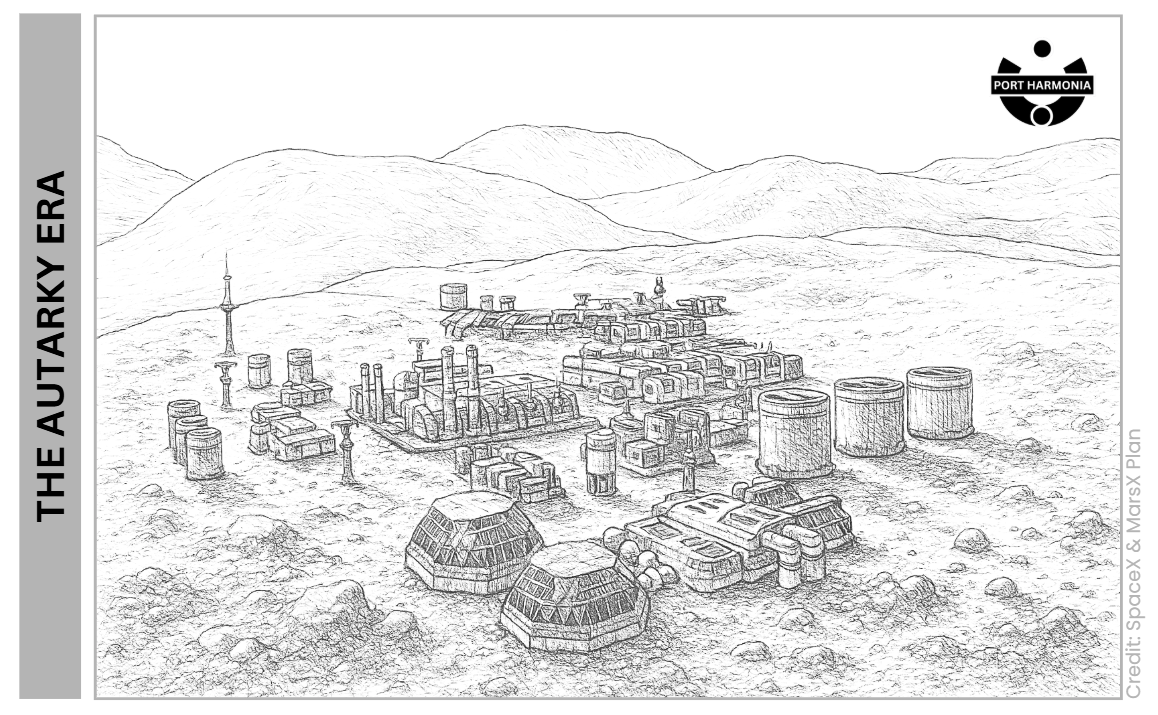
Main location: Port Harmonia, Ridgeway and Boreal spokes, Arcadia Planitia
Stage (internal): S2 consolidation → early S3 settlement (≈ IL-2 → IL-3 / IL-4)
Population: Peak ~400–450 at once. Total humans landed several hundred across the era; probably still < 1,000 individuals
Era soundbite: Thin buffers, real routines
Core question: Can Mars survive several “bad synods” from Earth without evacuation or mass casualty?
Core result: Thin buffers, real routines. Local power climbs, water recycles, ag/bioprocess pilots start; quarantine windows are a practice, not a poster.
Daily feel: Local power/water carry load; pilots teach sterility; quarantine windows kept.
Era Challenge: Face the reality that almost everything keeping Mars alive still comes from Earth — food, fuel, filters, medicines, plastics — and start building enough local closure in air, water, power, food, and spares that a bad decade on Earth doesn’t quietly kill the settlement. This is the era where the supply chain itself becomes the main character: bill-of-mass spreadsheets, launch manifests, and days-of-cover boards loom larger than heroic EVA shots. The question isn’t “can Mars be self-sufficient?” in the romantic sense; it’s “how fragile are we in each survival line, and what must we do so a single light window doesn’t force a retreat?”
Era Accomplishments: Era 2 turns a base camp into a working outpost with rhythms you can feel. The environmental backbone runs day after day without drama, local power carries meaningful load, and water is reliably reclaimed. Agricultural and bioprocess pilots produce non-trivial output and — more importantly — teach contamination control. Buffers are still skinny, so schedule discipline and quarantine windows matter. The settlement is no longer proving if it can live here; it’s learning how to live here without luck.
Survival Backbone Reliability: Power, air, water loops operate steadily through routine faults; planned ride-throughs for storms/outages feel boring. Preventative maintenance closes on time; alarm noise drops; small black-start segments practiced without surprises.
Make–Mend–Multiply: (Local Production & Repair Depth): Light fabrication becomes habit—seals, brackets, hose assemblies, basic machined/printed parts with documented QA. Real in-house parts catalog; measured first-pass yields; shrinking repair turnaround.
Food & Bioprocess Sufficiency: Flown rations anchor calories; pilot grow/bioprocess modules contribute supplements and train sterile practice. Menu plans flex to pilot outputs; contamination surveillance occasionally triggers recalls and lessons; basic reagent prep on-site.
Mobility, Storage & Logistics Resilience: EVA/rovers support weekly work in marginal conditions; buffer dashboards show clear days-of-cover for air/water/energy/critical spares. Tested abort routes; spare suits/rover rotation cycles; cargo layouts avoiding single-point handling; async comms/timebase keep ops coherent.
Economic Momentum & Trade Fit: Repeat demand for data, procedures, validated ISRU/repair flows; early service exchanges others rely on. Follow-on campaigns tied to specific deliverables; partners reusing SOPs; early pricing signals (time saved, failure avoided).
Gov. & Steward: Incident command runs on rails; permits, lock-outs, escalations followed; decisions/ exceptions reviewable. Clear handovers; after-action changes to SOPs; visible roles in drills.
Health, Biosecurity & Care Culture: Quarantine windows around biotraffic honored; sentinel air/surface checks routine; sleep/recovery protected as performance drivers. Clean don/doff discipline; transparent near-miss reporting; occasional containment drills touching common spaces.
Talent, Training & Team: Every critical task has ≥2 qualified operators; drills precede first-time ops; apprenticeships begin in earnest. Live skill matrices; calm cross-shift handovers; playbooks updated from field lessons.
Identity, Story & Attraction: Narrative matures from “we camped” to “we ran routines”: continuous ops, real repairs, safe pilots, audited logs. Earned media referencing receipts; consistent naming/signage; applicants citing procedures as the draw.
Allies, Capital & Partnership Readiness: Small, diversified network of backers/vendors; scoped MoUs fit outpost reality; standards sandboxes and clean exit ramps. Avoiding exclusivity on essentials; staged funding tied to ops milestones; graceful “no’s” to misaligned asks
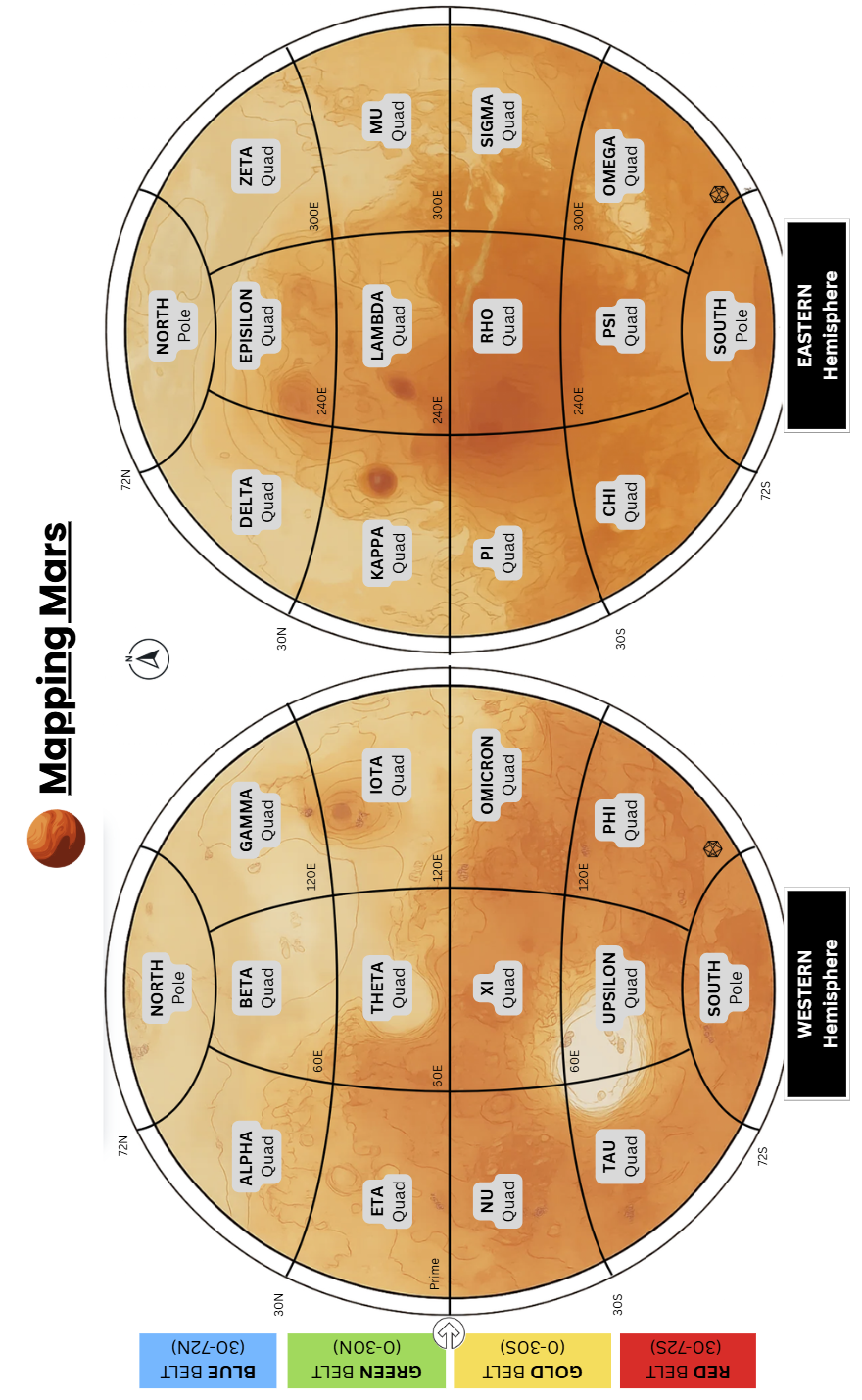
For more details see Mars Codex: Surface & Settlement.